10 AI Visibility Tools For New-Age Search Marketing in 2026
Compare the 10 best AI search visibility tools for 2026. See pricing, pros, cons, features, and which tools help you get found on ChatGPT, Google AI, and Perplexity at Best AISO.
My name is Suresh. I’m an AI-powered marketing professional based in India. I have over 15 years of experience working in online marketing. I am passionate about technology, entrepreneurship and writing. I am currently exploring AI search and marketing strategies. Read more on Suresh.tech and Aiso.blog.
The answer itself is becoming the focus of the search.
The search journey is increasingly moving from "find a page" to "get an answer."
About 68% of Google searches ended without a click in early 2026, up sharply year over year, according to SparkToro's analysis of Similarweb clickstream data from January to April 2026.
In September 2026, ChatGPT received 2.5 billion prompts per day for user queries (OpenAI, as reported by Best AISO).
A brand may rank well on Google yet be absent from an AI-generated answer.
Conversely, a brand may appear in AI recommendations even if it is not in the top traditional search position.
What are AI Visibility Tools?
AI visibility tools are software platforms designed to track, measure, and improve a brand's appearance in AI-powered search engines and chatbots.
Unlike traditional SEO tools, which track blue links on Google SERPs, AI visibility tools monitor whether large language models (LLMs), such as ChatGPT, Perplexity, Gemini, Claude, and Google AI Overviews, mention your brand, recommend your products, or cite your website as a source.
Also known as generative engine optimization (GEO) and answer engine optimization (AEO) tools.
The Best AI Visibility Tools: Compared in 2026
Want your brand to appear in ChatGPT, Perplexity, Gemini, and Google AI? Compare the top AI visibility and SEO tools, including features, and best business use-cases.
| Tool | AI Visibility | Content Optimization | Research & AI Writing | Best For |
|---|---|---|---|---|
| Frase | Yes | Yes | Yes | AI SEO content teams |
| Scalenut | Yes | Yes | Yes | SEO and AI content workflows |
| Rankability | Yes | Yes | Yes | Agencies and SEO teams |
| Koala AI | Limited | Yes | Yes | Affiliate and publisher content |
| NeuronWriter | Yes | Yes | Yes | AI SEO-focused content agencies |
Disclosure: This article may contain affiliate links, which provide compensation to Best AISO at no additional cost to you if you purchase a paid plan. This site is not intended to provide financial advice and is for educational purposes only. You can read our affiliate disclosure in the disclaimers section.
10 Best AI Visibility Tools to Get Found in ChatGPT & AI Search
Here are the best AI search presence tools for improving AI visibility in ChatGPT, Perplexity, Gemini, and Google AI. Compare features, pricing, pros, cons, and use cases at Best AISO.
1) Frase
Frase is an AI SEO and content optimization platform that researches top-ranking pages, helps you write in your brand voice, and scores content for both Google and AI search.
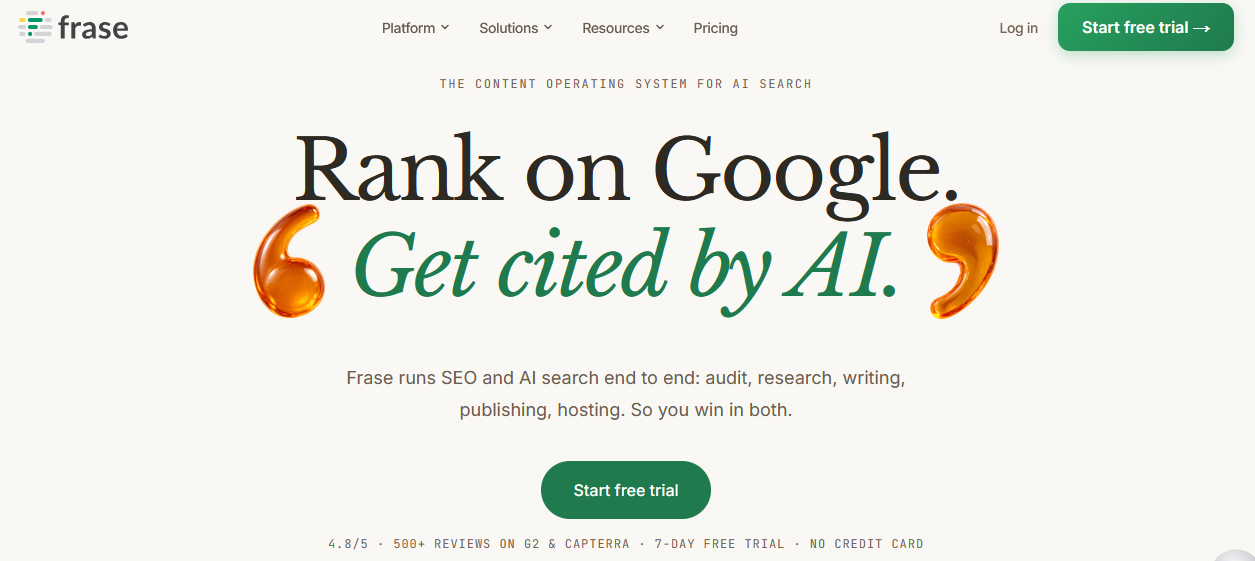
It positions itself around creating content that can rank in traditional search and get cited by AI platforms.
Pros
Real-time SEO and GEO content scoring
Researches top-ranking pages and content gaps
AI writing with brand voice support
Cons
Can be more complex than basic AI writing tools
Higher usage and team needs require higher-tier plans
Pricing plans: Plans start at $39/month when billed annually, with higher pricing for additional content, seats, and usage.
Who is it for: SEO specialists, content marketers, and teams that want to optimize content for both Google rankings and AI search visibility.
Link: https://www.frase.io/
2) Scalenut
Scalenut is an AI SEO and content platform that helps marketers research keywords, create articles, optimize existing pages, and track visibility across Google and AI search platforms.
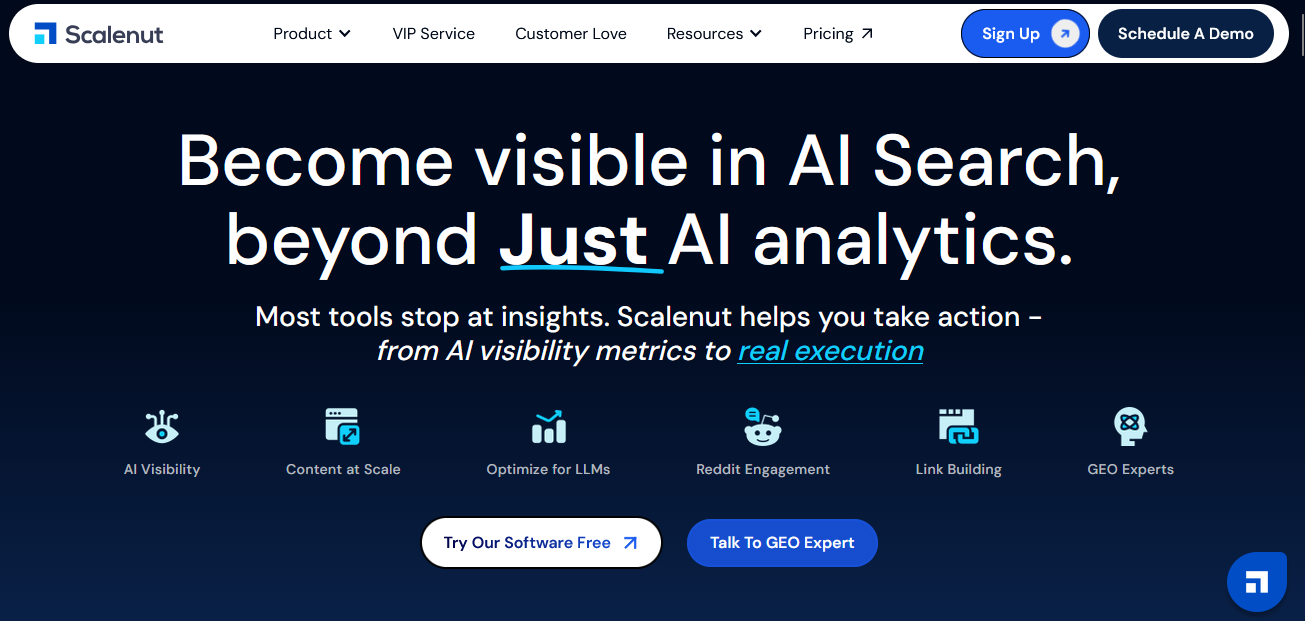
It combines content creation with Generative Engine Optimization features for marketers targeting both traditional and AI search.
Pros
AI-powered content creation with Cruise Mode
Real-time SEO and GEO content optimization
Tracks visibility across ChatGPT, Google AI Overviews, and Perplexity
Cons
Can feel feature-heavy for smaller content teams
Higher AI visibility and content limits require more expensive plans
Pricing plans: Starter is \(59/month, Plus is \)89/month, and Professional is $199/month. Annual plans are currently offered at discounted rates.
Who is it for: SEO teams, content marketers, agencies, and businesses that want one platform for content creation, SEO optimization, and AI search visibility.
Link: https://www.scalenut.com/
3) Rankability
Rankability is an SEO and AI search visibility platform that tracks how brands appear across search engines and AI platforms while helping teams research, create, and optimize content.
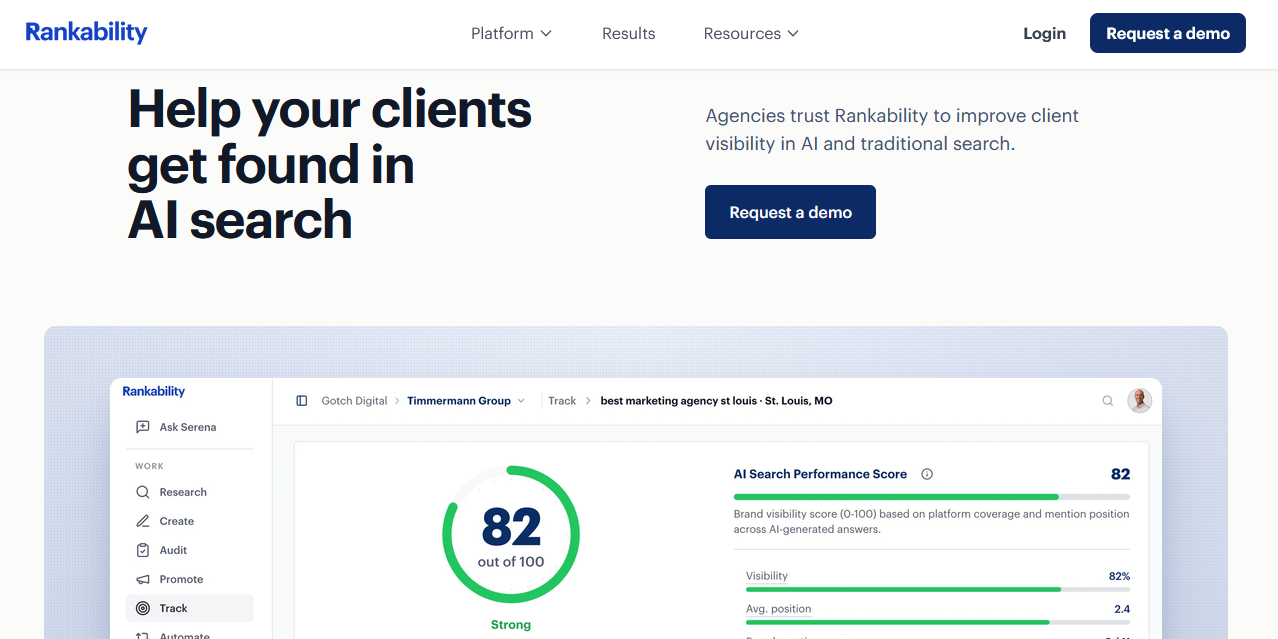
It combines traditional SEO tracking with AI mentions, citations, local search, and video visibility.
Pros
Tracks brand visibility across AI search platforms
Combines traditional SEO and AI search tracking
Includes content research, optimization, and technical audits
Unlimited seats across paid plans
Cons
More expensive than basic SEO content tools
AI search tracking limits vary by plan
Pricing plans: Starter is \(99/month, Core is \)199/month, and Team is \(399/month. Annual plans are \)990, $1,990, and $3,990 respectively.
Who is it for: SEO agencies, content teams, and businesses that want to monitor traditional rankings alongside brand mentions and citations across AI search platforms.
Link: https://www.rankability.com/
4) Koala AI
Koala AI is an AI content platform for SEO-focused marketers that researches topics, writes articles, creates images, and helps optimize content for search.
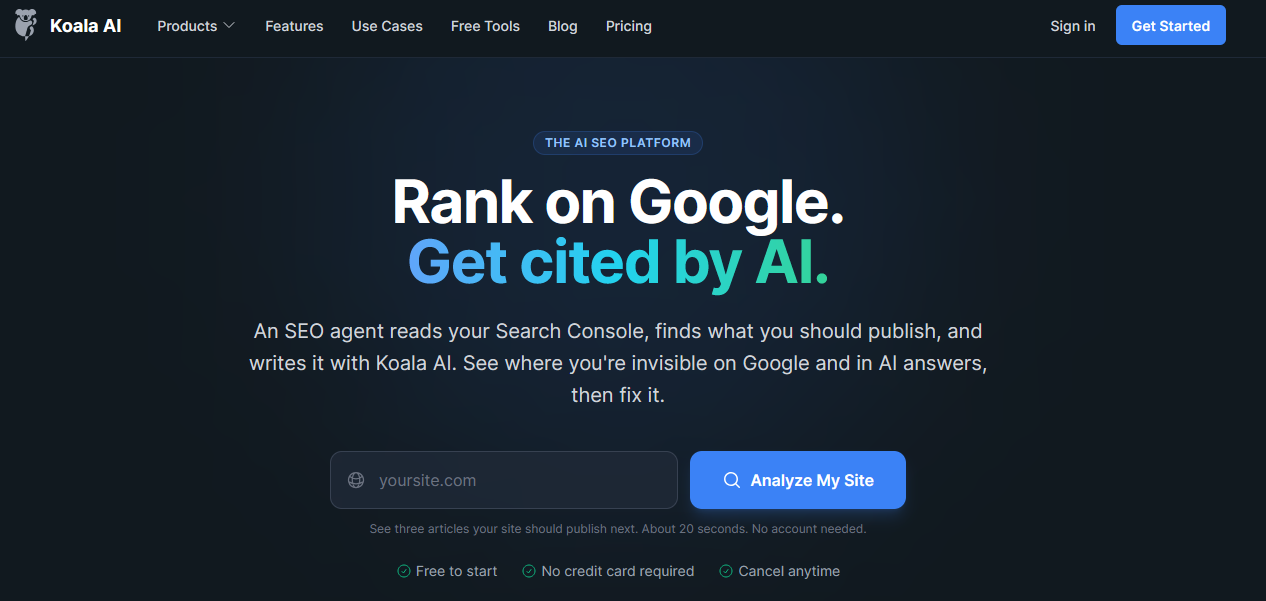
It combines KoalaWriter with tools for research, internal linking, images, and brand context, making it useful for marketers who want to move from keyword research to published content in one workflow.
Pros
Built specifically for SEO and content creation
Real-time research and SERP-based content generation
Includes AI writing, images, internal linking, and publishing tools
Brand DNA helps keep content aligned with a business
Cons
More expensive than basic AI writing tools
Higher-volume plans can become costly for smaller teams
Pricing plans: Essentials is \(9/month with 15,000 KoalaWriter words. Professional is \)49/month with 100,000 words, while higher-volume plans are available for larger content operations. A free trial includes 5,000 words and 25 chat credits.
Who is it for: SEO professionals, affiliate marketers, publishers, and content teams that want AI writing and SEO workflows in one platform.
Link: https://koala.sh/
5) NEURONwriter
NEURONwriter is an AI-powered content optimization platform that helps marketers research keywords, analyze competitors, create content, and optimize pages for traditional search and AI search.
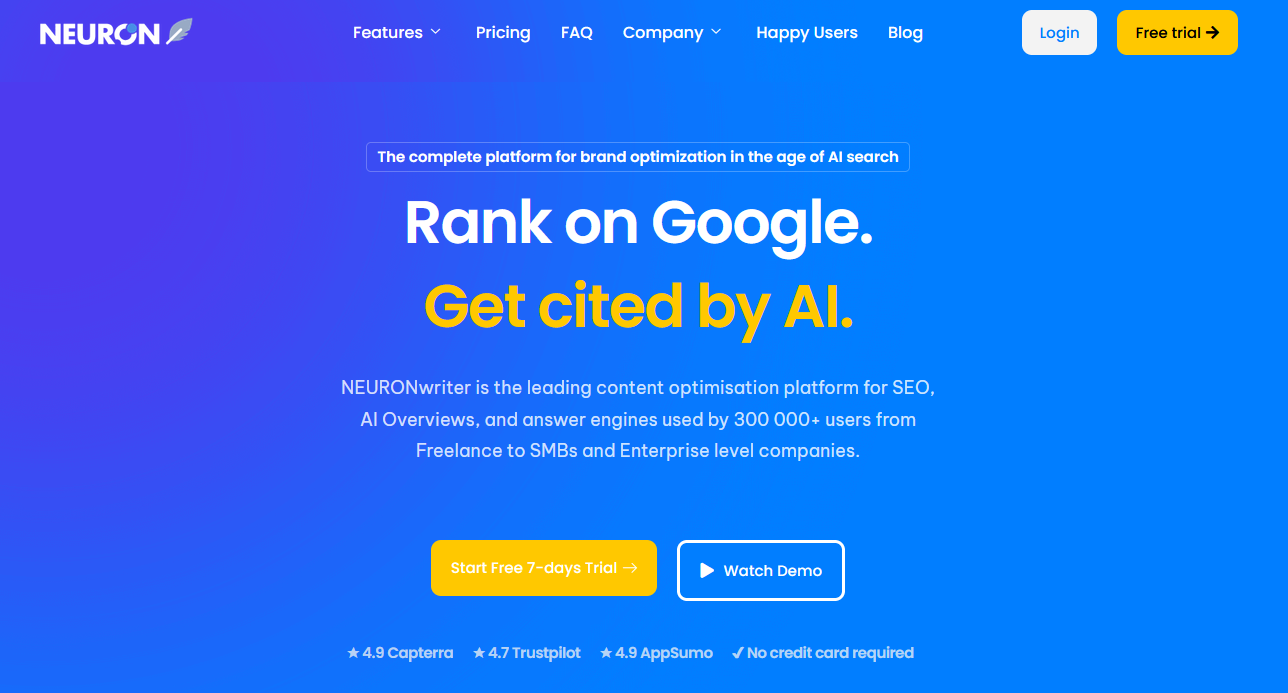
It combines NLP-based content optimization with AI writing tools and AI visibility features, helping content teams create pages designed for Google as well as AI-generated search results.
Pros
Combines SEO content optimization with AI writing
Supports optimization for Google, AI Overviews, ChatGPT, and Perplexity
Provides competitor analysis, content scoring, and keyword recommendations
Integrates with Google Search Console and WordPress on higher plans
Cons
More SEO-focused than general-purpose AI writing tools
Advanced features require higher-tier plans
Pricing plans: Bronze starts at \(23/month or \)19/month when billed annually. Silver is \(45/month, Gold is \)69/month, Platinum is \(93/month, and Diamond is \)117/month. Annual billing reduces the monthly equivalent by around 20%.
Who is it for: SEO professionals, content writers, agencies, and businesses that want to combine AI content generation with SEO and AI search optimization.
Link: https://neuronwriter.com/
6) Brandwell AI
Brandwell is an AI content platform (formerly Content at Scale) built to generate long-form, SEO-optimized blog posts that read as human-written and pass AI detection.
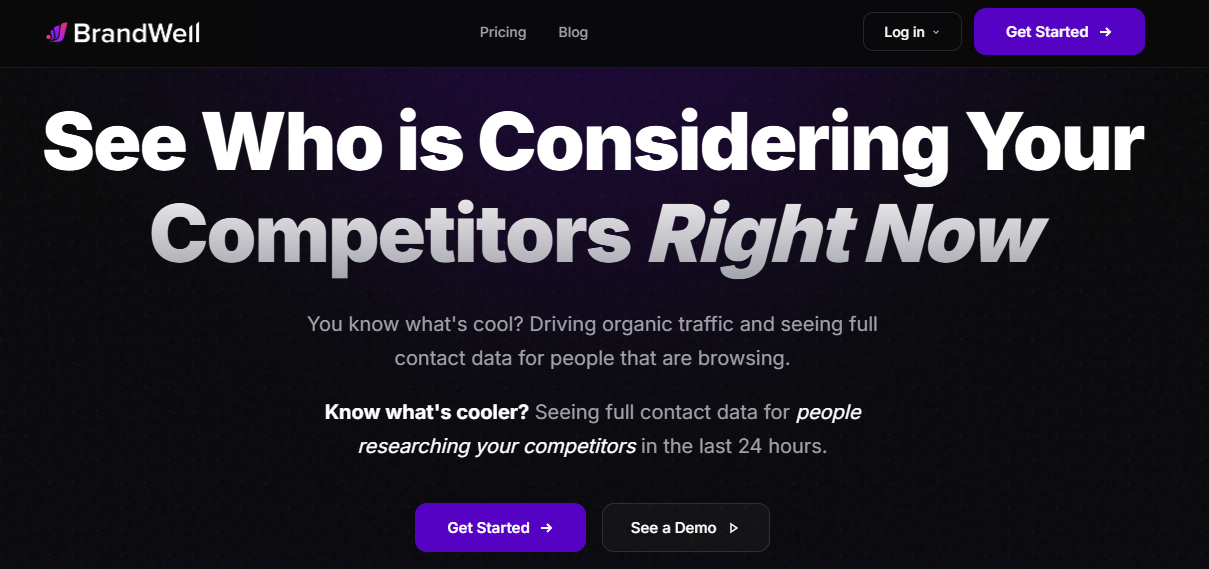
It promotes itself as the tool for producing ranking content at volume without sounding robotic.
Pros
Long-form SEO drafts with built-in optimization
Bulk content production for high-volume sites
Human-like output aimed at passing detectors
Cons
Long-form focus means less fit for short copy
Output still needs editorial review
Pricing plans: Paid plans scale by monthly content volume, starting in the mid-tier range.
Who is it for: Content-heavy sites and agencies that need SEO-optimized long-form drafts produced at scale.
Link: https://brandwell.ai/
7) OriginalityAI
Originality AI is an AI content detection and plagiarism tool that scores how likely text is AI-generated and flags copied passages, helping SEO teams keep content credible.
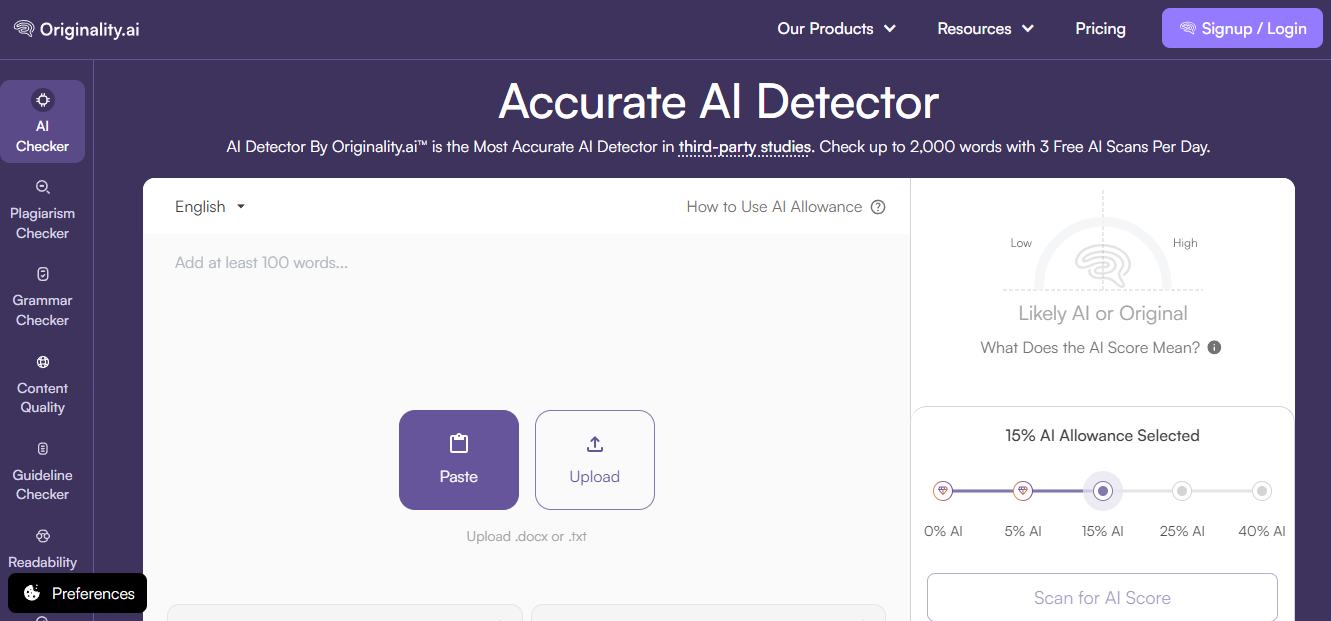
It promotes itself as the fact-checking and originality layer for teams publishing at scale.
Pros
Accurate AI-detection and plagiarism scanning
Team dashboard for reviewing many pieces
Useful for editorial QA and freelancer oversight
Reliable as far as AI content detectors go
Cons
Detection is a guide, not an absolute verdict
Narrow scope, focused on checking rather than creating
Pricing plans: Pay-as-you-go credits plus a low monthly subscription option.
Who is it for: Editors and content managers who need to verify originality and quality across a large volume of published work.
Link: https://originality.ai/
8) Semrush ContentShake AI
ContentShake AI is Semrush's (An Adobe Company) AI writing and SEO tool that combines topic research, competitor analysis, and optimized drafting in one workflow.
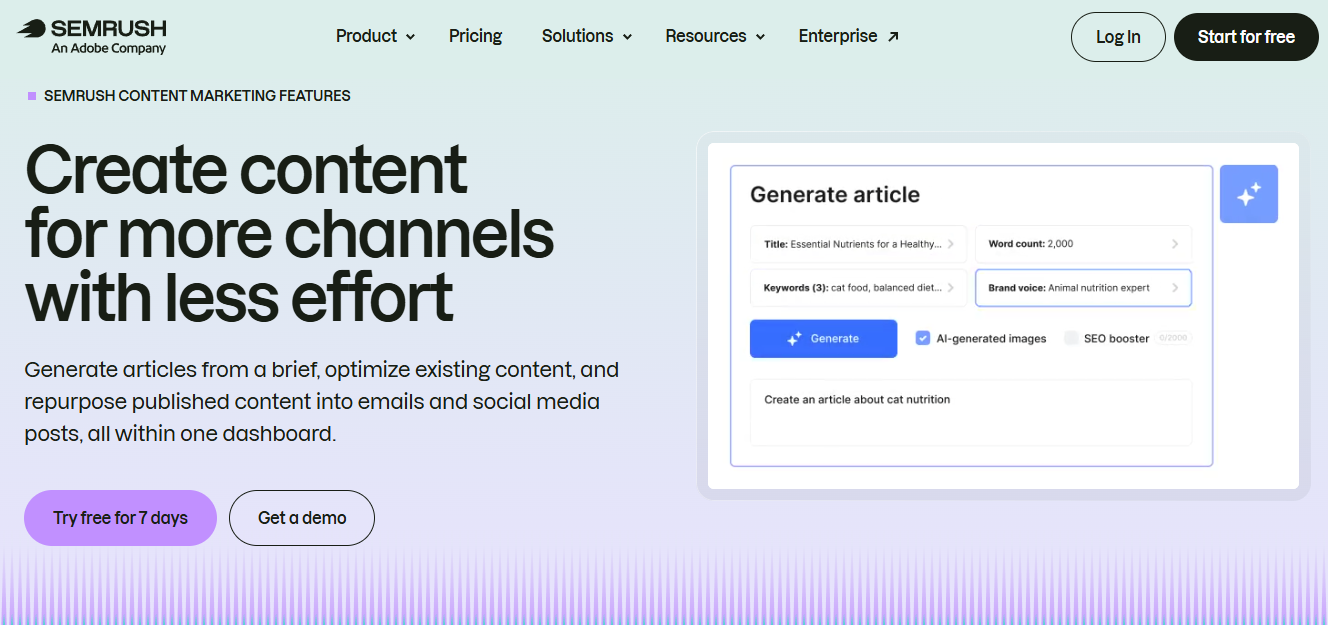
It promotes itself as the fast lane from keyword to published, ranking-ready blog post.
Pros
Research, writing, and optimization in one tool
Built on Semrush data
Beginner-friendly guided workflow
Cons
Less depth than dedicated optimization tools for advanced users
Best value tied to the Semrush ecosystem
Pricing plans: Free trial available, with a paid plan around $60/month for unlimited AI content plus optimization.
Who is it for: Small teams and solo marketers who want research, writing, and SEO in a single, guided workflow.
9) Clearscope
Clearscope is an SEO content optimization platform that grades content against search intent using AI-driven term analysis and keyword discovery.
It promotes itself as the premium, accuracy-first choice for teams that take content quality seriously.
Pros
Accurate, intent-focused term recommendations
Clean grading scale that is easy for writers to follow
Reliable keyword discovery reports
Cons
Higher entry price than most competitors
Fewer all-in-one features beyond optimization
Pricing plans: Essentials starts around \(129/month (or \)99 with discount), with Business near $399/month.
Who is it for: Content teams and agencies that prioritize accuracy and are willing to pay a premium for it.
10) Surfer
Surfer SEO is a content optimization platform that scores your writing in real time against top-ranking pages and tells you which terms, headings, and length will help you rank.
It promotes itself as the tool that takes the guesswork out of on-page SEO, and every serious content team knows the name.
Pros
Real-time content score as you write
Clear term and structure recommendations
Integrates with Google Docs and AI writers
Cons
Over-optimizing to the score can hurt readability
Credit and article limits on lower tiers
Pricing plans: Essential is around $79 to $99/month, with higher tiers up to roughly $399/month.
Who is it for: Search engine optimization specialists and content marketers who want data-backed guidance on every page they publish.
What is AI search optimization?
AI search optimization is the process of making your website, brand, and content easier for AI-powered search engines and answer engines to understand, retrieve, cite, and recommend.
Traditional SEO focuses heavily on ranking pages in search results and earning clicks. AI search optimization focuses on a broader visibility question:
Does an AI system mention your brand when someone asks a relevant question?
AI systems can use information from your website, search results, reviews, publications, forums, product pages, and other third-party sources when generating an answer. That means ranking in Google is no longer the only visibility metric that matters.
AI search optimization is also referred to as:
Generative Engine Optimization (GEO)
Answer Engine Optimization (AEO)
Large Language Model Optimization (LLMO)
AI SEO (AISEO)
AISO (AI Search Optimization)
AI visibility optimization
The terminology varies, but the underlying goal is similar: increase the likelihood that your brand or content is understood, mentioned, cited, and recommended in AI-generated answers.
What do AI visibility tools measure?
AI visibility tools can track several different signals, including:
Brand mentions: How often an AI platform mentions your brand in response to relevant prompts.
Citation visibility: How often AI-generated answers link to your website or specific pages.
Share of voice: How frequently your brand appears compared with competitors for a defined set of prompts.
Prompt coverage: Which questions and topics produce a brand mention.
Recommendation rate: How often an AI system recommends your brand, product, or service.
Competitor visibility: Which competing brands appear in the same AI answers.
Citation sources: Which websites, publications, reviews, and other sources are being used to support AI answers.
Sentiment and positioning: How AI systems describe your brand when it appears.
Visibility trends: Whether your presence in AI answers is increasing or declining over time.
These metrics matter because an AI answer does not have to rank your website in position one to influence a potential customer. It may simply mention your company as one of the brands worth considering.
How is AI SEO different from traditional SEO?
Traditional SEO primarily asks:
"How can I rank this page?"
AI search optimization asks a broader question:
"How can I make my brand the answer?"
There is significant overlap between the two. Search-friendly content, authoritative backlinks, strong technical SEO, useful information, and clear topical relevance can benefit both.
But AI search introduces additional considerations.
AI systems need to understand entities, relationships, context, facts, and sources, not just keywords.
This makes brand authority particularly important. Your website is one source of information about your business, but AI systems can also encounter your brand through third-party publications, reviews, directories, forums, social platforms, videos, and other websites.
The result is that AI visibility is increasingly a combination of SEO + content quality + entity clarity + brand authority + third-party validation.
What makes content more likely to appear in AI answers?
There is no single optimization trick that guarantees an AI citation.
However, content is easier for AI systems to use when it has:
Clear answers to specific questions
Descriptive headings and subheadings
Concise definitions
Original data and statistics
Named sources for factual claims
Clear authorship and expertise
Specific examples
Consistent brand and product information
Strong internal linking
Relevant third-party references
Up-to-date information
Structured data where appropriate
Pages that directly satisfy the search intent
The goal is not to write content "for robots."
The goal is to make the information so clear, specific, authoritative, and easy to verify that both humans and machines can understand it.
AI search visibility tools FAQ
What is an AI visibility tool?
An AI visibility tool monitors how often a brand, website, product, or company appears in AI-generated answers across platforms such as ChatGPT, Perplexity, Gemini, Claude, and Google AI features. Depending on the platform, it may track mentions, citations, recommendations, competitors, prompts, and visibility trends.
Is AI SEO the same as traditional SEO?
No. There is substantial overlap, but the objectives are different. Traditional SEO focuses heavily on rankings and organic search traffic. AI SEO also considers brand mentions, citations, entity understanding, source authority, recommendations, and visibility inside generated answers.
What is GEO in SEO?
GEO stands for Generative Engine Optimization. It generally refers to optimizing content and online information so generative AI systems are more likely to use, cite, or mention it when producing answers.
What is AEO?
AEO stands for Answer Engine Optimization. It focuses on structuring content so answer engines can efficiently identify and present useful answers to user questions.
Does ranking #1 on Google guarantee AI visibility?
No. Ranking highly in traditional search does not guarantee that a brand will be mentioned or cited in an AI-generated answer. AI systems can use information from multiple sources when constructing a response.
What should I track for AI search visibility?
Useful metrics can include brand mentions, citations, share of voice, prompt coverage, competitor visibility, recommendation frequency, citation sources, and visibility over time.
Can AI visibility be measured?
Yes, although measurement is still evolving. AI visibility platforms can run defined prompts across supported AI search systems and track whether a brand appears, how it appears, and which sources are cited.
Do I need an AI visibility tool if I already use Semrush or Ahrefs?
It depends on your goals and the features available in your current subscription. Traditional SEO platforms can provide valuable search and content data, while dedicated AI visibility platforms may provide more specialized tracking of brand mentions, citations, prompts, and AI-generated recommendations.
Does AI search optimization replace SEO?
No. SEO remains an important source of discoverability and authority. AI search optimization expands the scope of search visibility by considering how brands and information are represented inside AI-generated answers.
Conclusion: What AI visibility tools cannot tell you
AI visibility tools track and measure how often generative AI engines, such as ChatGPT, Perplexity, Claude, Microsoft Copilot and Google AI Overviews, cite or mention your brand name.
AI visibility is not as deterministic as a traditional Google ranking.
A page can rank #1 for a keyword and never appear in an AI answer. An AI system can mention a brand without citing its website. And two users asking similar questions can receive different answers.
That means AI visibility metrics should be treated as directional measurements rather than permanent rankings.
When comparing tools, look at:
How prompts are selected
Which AI platforms are monitored
How frequently prompts are refreshed
Whether results are stored historically
Whether citations are recorded
Whether competitors are tracked
Whether results can be segmented by topic
How the platform handles changes in AI model behavior
The goal is not to find a single "AI ranking."
The goal is to understand how often, where, and why your brand appears in the answers that matter to your customers.
Read more relevant posts on Best AISO Website:

![How to Make a YouTube Video That AI Cites [2026]](https://cdn.hashnode.com/uploads/covers/5f8dd1613432643d6b92c06c/7f3a5b86-fb69-4b30-80a9-07a8b1207596.jpg)