The 5 Popular Blogging Platforms in 2026
Discover the best blogging platforms. Compare Hashnode, WordPress.org, Blogger, Ghost, and Wix for SEO, AI search, customization, publishing, and growth at Best AISO.

My name is Suresh. I’m an AI-powered marketing professional based in India. I have over 15 years of experience working in online marketing. I am passionate about technology, entrepreneurship and writing. I am currently exploring AI search and marketing strategies. Read more on Suresh.tech and Aiso.blog.
Choosing the right blogging platform can make a huge difference when you are starting a blog.
The platform you choose affects how easily you can publish content, customize your website, grow your audience, optimize for search engines, monetize your content, and eventually turn your blog into a business.
But with so many blogging platforms available in 2026, which one should you choose?
I have tested and researched the major options available to bloggers, creators, publishers, and businesses. In this guide, I’ll walk you through the 5 best blogging platforms in 2026:
Hashnode
WordPress.org
Blogger
Ghost
Wix
Each platform serves a slightly different type of blogger. Some are designed for simplicity, some offer almost unlimited customization, and others focus on publishing, newsletters, memberships, or business websites.
Let’s take a closer look.
What Is a Blogging Platform?
A blogging platform is software that allows you to create, publish, manage, and share blog content online.
Depending on the platform, you may get features such as:
A visual or Markdown editor
Website hosting
Custom domains
SEO tools
Themes and design customization
Analytics
Newsletter functionality
Monetization options
Social sharing
Memberships and subscriptions
Plugins or integrations
The best blogging platform for you depends on what you want to accomplish with your blog.
If you want a simple place to start writing, you may prefer Blogger or Hashnode.
If you want complete control over your website, WordPress.org is a powerful option.
If you want to build a publication around newsletters and memberships, Ghost is worth considering.
And if you want a visual website builder with blogging included, Wix offers an all-in-one approach.
1. Hashnode
Best for: Developers, technical writers, AI builders, and technology-focused bloggers
Hashnode is the platform I personally chose to create BestAISO.com, so it naturally comes first on my list.
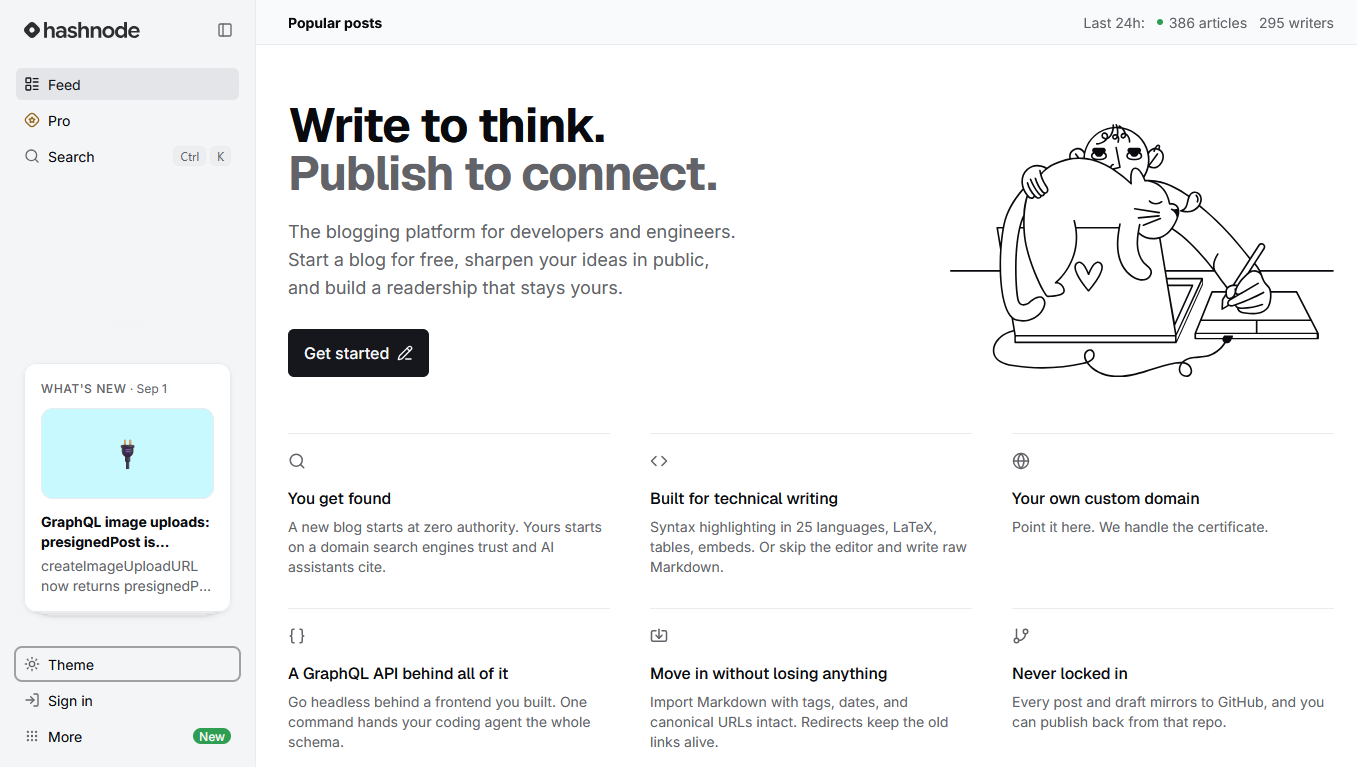
Hashnode is built specifically around modern technical publishing. Its editor supports Markdown, code blocks, syntax highlighting, LaTeX, tables, embeds, and other features that make it particularly useful for developers and technical writers. Hashnode also supports custom domains and offers tools for connecting content with GitHub.
For bloggers working in AI, software, development, startups, cybersecurity, data, or other technical fields, this focus can be extremely useful.
Why I like Hashnode
One of the biggest advantages of Hashnode is that you can start publishing without building an entire website from scratch.
You can focus on what matters most: creating useful content and building an audience.
Hashnode also has several features that are particularly interesting for modern SEO and AI search.
In 2026, Hashnode introduced an AEO toolkit that includes features such as FAQ structured data, an AEO score, AI crawler controls, llms.txt, freshness tools, and citation tracking. Hashnode has also added support for serving articles as Markdown, which is designed to make content easier for LLMs, agents, and other systems to consume.
That makes Hashnode especially interesting for anyone thinking beyond traditional Google SEO and focusing on AI search optimization and answer engine optimization.
Hashnode features
Developer-focused publishing

Markdown support

Code blocks and syntax highlighting

Custom domains

SEO-friendly publishing features

AI writing assistance

GitHub backups

GraphQL API and headless publishing options

Technical blogging community

AEO-focused features on eligible plans
Hashnode also offers a free starting point, while its Pro offering adds features such as custom domains, AI assistance, GitHub backups, scheduled publishing, multiple publications, and other advanced publishing capabilities.
Who should use Hashnode?
Hashnode is a strong option if you are:
A developer

An AI or technology blogger

A technical writer

A software engineer

A startup founder

An indie hacker

A developer advocate

Someone building an audience around technical expertise
For me, the combination of technical publishing, discoverability, Markdown, and modern AI-oriented features is what makes Hashnode particularly interesting in 2026.
Visit Hashnode: https://hashnode.com/
2. WordPress.org
Best for: Bloggers and businesses that want maximum control and flexibility
WordPress.org remains one of the most flexible ways to build a blog or complete website.
It is important to distinguish WordPress.org from WordPress.com.
WordPress.org is the open-source software that you can install on your own hosting account, giving you significantly more control over your website.
WordPress describes itself as an open-source publishing platform used for everything from simple blogs to complex business websites and applications.
The biggest advantage of WordPress.org is flexibility.
You can choose your hosting provider, install a theme, add plugins, modify your design, create custom functionality, and build almost any type of website you want.
Why choose WordPress.org?
WordPress offers thousands of themes and plugins, allowing you to extend your website far beyond basic blogging.
You can add:
SEO tools

Analytics

Contact forms

Ecommerce

Memberships

Forums

Newsletters

Social integrations

Performance tools

Security features

Custom functionality
WordPress also gives you ownership and control over your website, content, and data.
For someone building a long-term content business, that flexibility can be important.
The downside
The flexibility of WordPress is also its biggest challenge.
You are generally responsible for choosing hosting and maintaining your installation. You may also need to manage updates, plugins, security, backups, and performance.
For beginners, that can create a steeper learning curve than a fully managed blogging platform.
Who should use WordPress.org?
WordPress.org is worth considering if you:
Want complete control over your website

Are building a business website

Want extensive customization

Need plugins and integrations

Plan to monetize your content

Want to build a large content site

Have the time or resources to manage a self-hosted website
Visit WordPress.org: https://wordpress.org/
3. Blogger
Best for: Beginners looking for a simple and established blogging platform
Blogger is Google's long-running blogging platform and remains one of the simplest ways to start publishing online.

You can create a blog, choose a blog address, select a design, publish posts, and manage your content without worrying about setting up your own hosting infrastructure.
Blogger also supports custom domains, built-in analytics, templates, comments, labels, and monetization through Google AdSense.
Why choose Blogger?
The biggest appeal of Blogger is simplicity.
You don't need to become a web developer before you can start writing.
You can:
Create a blog quickly

Publish posts and pages

Schedule posts

Organize content with labels

Use a Blogspot domain

Connect a custom domain

Monitor blog analytics

Enable sharing features

Potentially monetize through AdSense
Google's Blogger documentation also confirms support for custom domains, search engine visibility settings, backups, analytics, themes, and other core blogging features.
The downside
Blogger is intentionally simple.
If you want extensive design flexibility, advanced publishing workflows, a large plugin ecosystem, or sophisticated membership and subscription functionality, you may eventually find it limiting compared with platforms such as WordPress or Ghost.
Who should use Blogger?
Blogger can make sense for:
First-time bloggers

Personal bloggers

Hobby bloggers

Writers who want a simple publishing setup

People who don't want to manage hosting

Beginners who want to start blogging with minimal technical complexity
Visit Blogger: https://www.blogger.com/
4. Ghost
Best for: Professional publishers, newsletter creators, and membership-based businesses
Ghost takes a different approach to blogging.
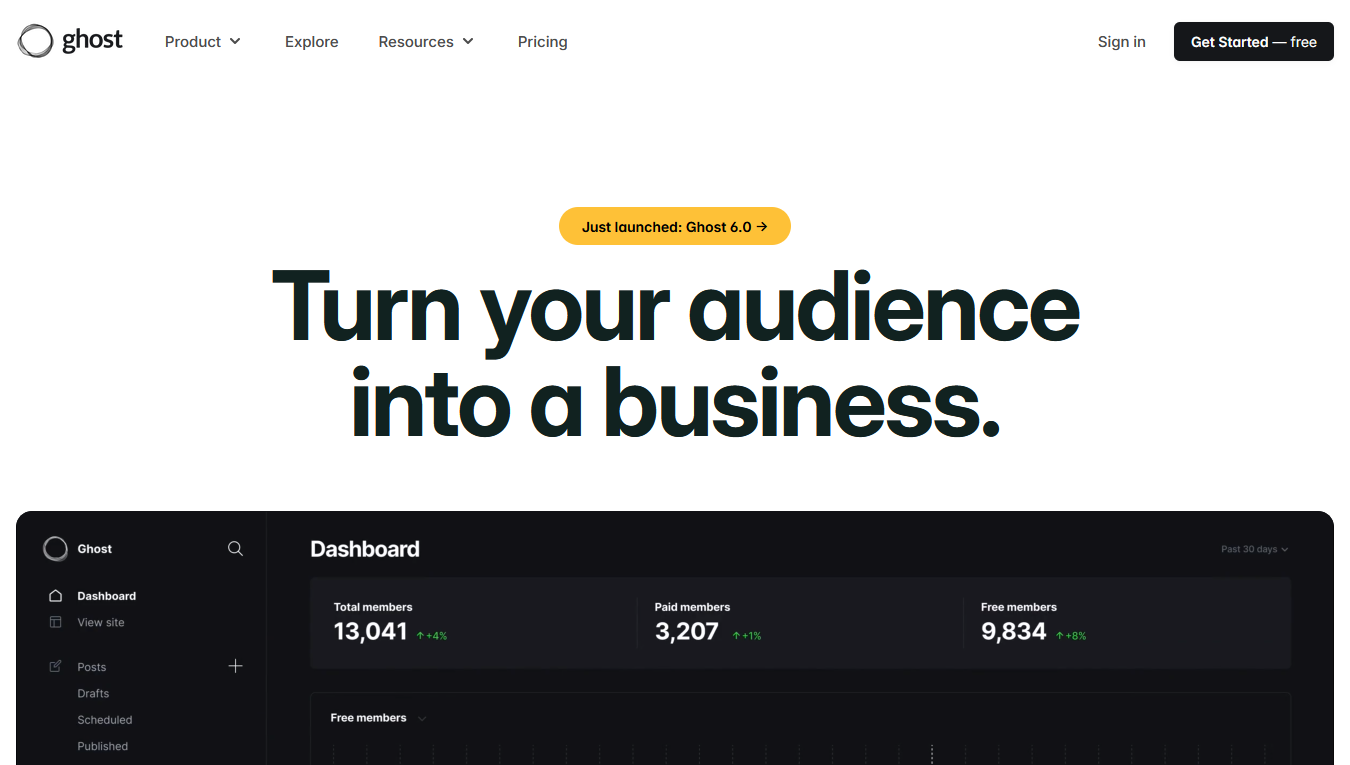
Rather than trying to be everything for everyone, Ghost focuses heavily on publishing, newsletters, memberships, and building an independent media business.
Ghost describes itself as a professional publishing platform for creating, sharing, and growing a business around content. It includes website publishing, newsletters, memberships, subscriptions, and analytics.
Why choose Ghost?
If your goal is to turn your blog into a publication, Ghost is particularly interesting.
You can publish an article on your website and distribute it as an email newsletter to your audience.
Ghost also supports free and paid memberships, allowing publishers to create subscription-based content businesses.
From an SEO perspective, Ghost includes several important technical features out of the box, including XML sitemaps, canonical URLs, structured data, metadata controls, and other SEO functionality.
Ghost features
Professional publishing tools

Custom website design

Built-in newsletters

Free and paid memberships

Subscription functionality

Native analytics

SEO features

Custom themes

Open-source software

Integrations with other services
The downside
Ghost is more specialized than WordPress.
If you want thousands of plugins and the ability to turn your site into almost anything imaginable, WordPress offers a broader ecosystem.
Ghost makes more sense when your primary goal is publishing and building an audience around content.
Who should use Ghost?
Ghost is a strong option for:
Professional bloggers

Newsletter creators

Independent publishers

Content businesses

Writers

Media companies

Creators building paid memberships
Visit Ghost: https://ghost.org/
5. Wix
Best for: Beginners and businesses that want a website builder with blogging
Wix is best known as a visual website builder, but it also includes a complete blogging solution.
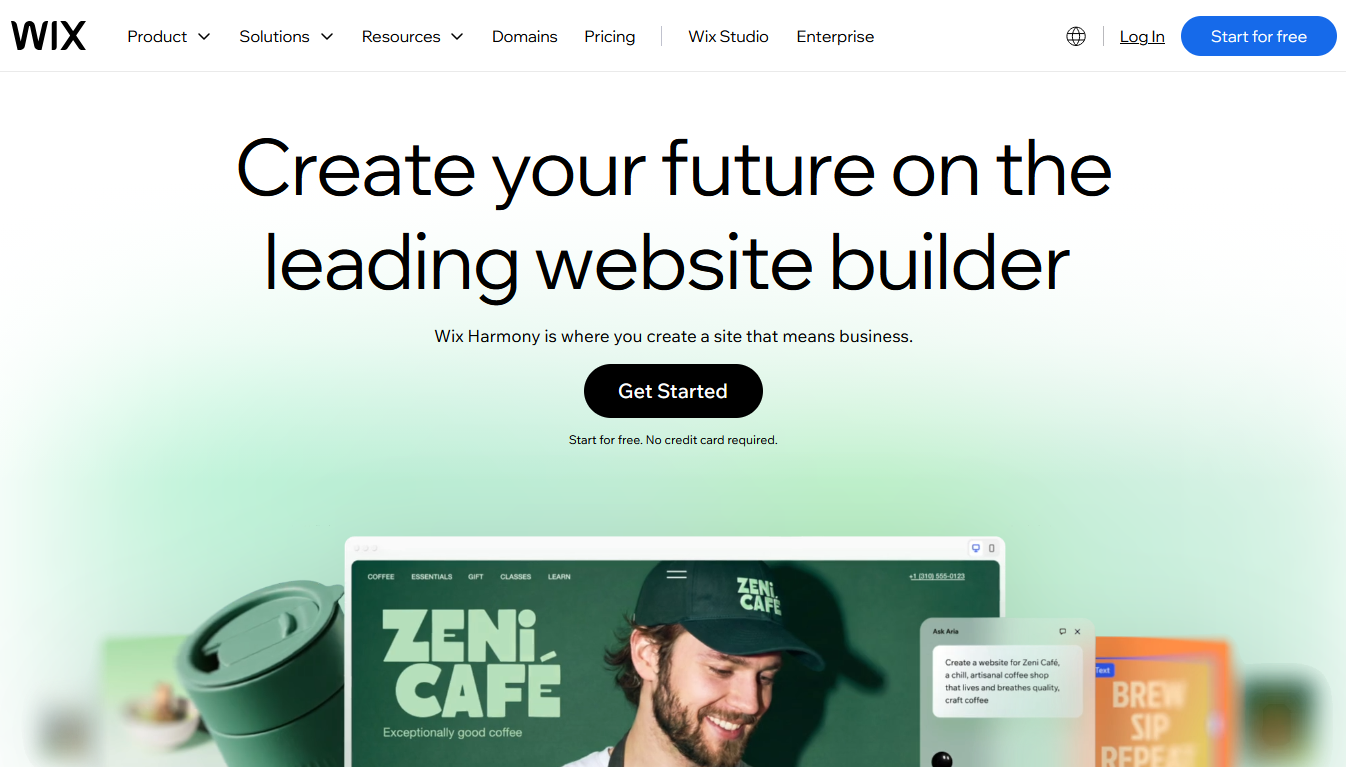
The advantage is that your blog doesn't have to exist separately from your business website.
You can build your website, add a blog, customize the design, manage content, analyze traffic, and work on SEO from the same ecosystem. Wix provides customizable blog templates, SEO tools, analytics, monetization options, comments, subscriptions, and support for multiple writers.
Why choose Wix?
Wix is particularly appealing if design is important to you.
Its visual editor makes it possible to build a website without writing code, while its blogging tools allow you to publish articles and organize them into categories.
Wix also provides AI-powered website creation and other AI tools that can help with building and managing a website.
Wix features
Visual website builder

Blog templates

Drag-and-drop customization

SEO tools

Blog analytics

Custom domains

Multiple writers

Comments and community features

Subscription and monetization options

AI-powered website tools

Mobile management
The downside
Wix is primarily a website-building platform rather than a blogging-first platform.
If your entire business revolves around publishing, a platform such as Ghost or WordPress may offer a more specialized experience.
But if your goal is to create a business website with a blog, Wix can be a practical option.
Who should use Wix?
Wix can be a good fit for:
Small businesses

Freelancers

Consultants

Creators

Service businesses

Personal brands

Beginners who prioritize visual design
Visit Wix: https://www.wix.com/
Popular Blogging Platforms Comparison 2026
Here is a quick overview of how these five platforms differ:
| Platform | Best For | Main Strength |
|---|---|---|
| Hashnode | Developers and technical creators | Technical publishing and modern AI/AEO features |
| WordPress | Businesses and serious bloggers | Flexibility and customization |
| Blogger | Beginners and personal bloggers | Simplicity |
| Ghost | Publishers and newsletter creators | Publishing, memberships, and newsletters |
| Wix | Businesses and creators | Visual website building and blogging |
How to Choose the Best Blogging Platform
There isn't one blogging platform that is perfect for everyone.
The right choice depends on your goals.
Choose Hashnode if...
You are a developer, technical writer, AI builder, or technology-focused creator and want a publishing environment designed around technical content.
Choose WordPress.org if...
You want maximum control over your website and expect your blog to become part of a larger business or content operation.
Choose Blogger if...
You want to start writing quickly and don't need advanced website functionality.
Choose Ghost if...
You want to build a publication, newsletter, membership community, or subscription-based content business.
Choose Wix if...
You want a visually designed business website that also includes a blog.
What Makes a Blogging Platform Good for SEO in 2026?
SEO is no longer just about adding keywords to an article.
A modern blogging platform should make it easy to create content that is technically accessible, structured, fast, discoverable, and useful.
For traditional search, look for features such as:
Custom titles and descriptions
Clean URLs
Canonical URLs
XML sitemaps
Structured data
Mobile-friendly pages
Good site performance
Internal linking
Image optimization Analytics and search performance data
But in 2026, bloggers should also think about AI search optimization.
AI assistants and answer engines increasingly use web content to answer questions, summarize information, and provide citations.
That means your content should be easy for both humans and machines to understand.
Clear headings, concise answers, descriptive page structure, original insights, factual accuracy, useful examples, and well-organized information can all contribute to making content easier to interpret.
Some platforms are now building AI search and AEO functionality directly into their publishing workflows. Hashnode, for example, has introduced features focused specifically on AI crawler controls, structured data, AEO scoring, and citation tracking.
This is one reason I believe the definition of "SEO-friendly blogging platform" is changing.
Final Thoughts
The best blogging platform in 2026 depends on what you want to build.
Hashnode is particularly compelling for developers, technical writers, AI builders, and technology-focused creators.
WordPress.org remains highly flexible for people who want control over their website and content infrastructure.
Blogger keeps things simple for people who want to start publishing without dealing with complicated setup.
Ghost is built around professional publishing, newsletters, memberships, and content businesses.
Wix combines blogging with a visual website-building experience that works well for businesses and creators.
For me, Hashnode was the natural choice for BestAISO.com because I wanted a modern publishing environment where I could write about AI SEO, search, content strategy, and the future of online discovery.
But the right platform for you depends on your goals.
Don't choose a blogging platform simply because it is popular.
Choose the platform that makes it easier for you to publish consistently, build an audience, own your content, and grow your online presence over the long term.
About the Author
Suresh Chaudhary is an AI SEO expert and solo builder dedicated to helping businesses grow through AI-driven search engine optimization.
He is the founder and creator behind BestAISO.com, where he builds and shares practical strategies for modern blogging, AI search optimization, and the evolving world of search.
His work focuses on helping businesses understand how search is changing and how content creators can build websites that are useful to both people and AI-powered search systems.
Read more posts on BestAISO:

![Submit AI Tool to the [Best AI Tools Directory in 2026]](https://cdn.hashnode.com/uploads/covers/5f8dd1613432643d6b92c06c/82b5c0b0-3559-481f-aa81-0aaab743e2db.jpg)